Internship for High School Credit by Apologia {Review}

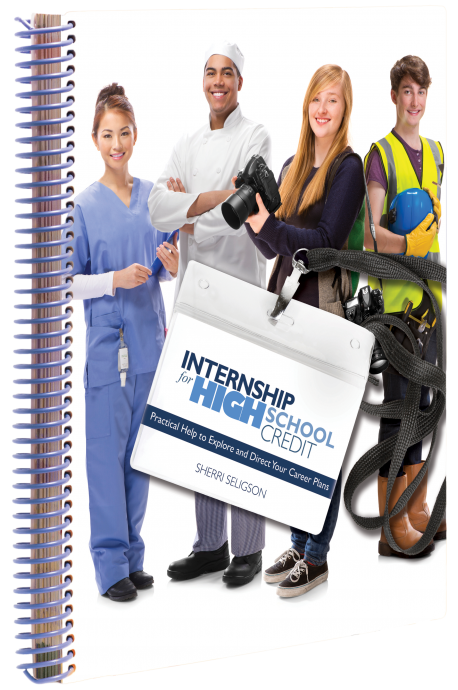
Did you know that your high school student can get real world experience through an internship and count it as high school credit on their transcript?  I had not thought about that before but there is a great book called Internship for High School Credit: Practical Help to Explore and Direct Your Career Plans by Apologia Educational Ministries that helps walks students through the process.  This book was offered as a review product to the Homeschool Review Crew and I am very happy to review it.
Internship for High School Credit

Internship for High School Credit starts out by discussing what an internship is and how it evolved from the apprenticeship model of the Middle Ages.  Back in those days, young people would learn their skills and craft mostly from hands-on experience.  They would learn the ways of the trade and practice to improve their skills over time by working with a master or expert in the field.  When they were finally on their own, they already knew what was expected of them and what the day to day requirements of the job would be.  

But over time, that concept has slipped away.  These days, students go through the basic 12 years of school and are expected to know what they want to be when they grow up without having ever actually stepped foot in a place of business in their chosen career.  They then spend thousands of dollars to attend four years of college and still may not know what it is like to actually do that job every day.  

They graduate and they get their first job.  And sadly, many young people are shocked and dismayed after just a few years in their field. "Wait, what?  I have to do that in this job?  That isn't what I thought I signed up for!"  They are discouraged to learn that their career isn't all that they dreamed of and that it really wasn't what they were expecting.  At this point, they have two choices - keep on plugging away at a career that isn't a good fit for them or cut their losses and start over with a new career. 

The idea of an internship is a great way for young students to gain more experience in the career path they want to pursue.  They learn the ins and outs  of the day-to-day job responsibilities of the field BEFORE they invest thousands of dollars and years of their life to it.   They are better able to focus their college degree on the skills they really need to learn because they know where they are heading.  Plus, colleges are delighted to see students' applications that show they have some experience in their field because the colleges know that those students already know that this is what they want to do and are much less likely to drop out of school.  Not only are these all great reasons for pursuing an internship in high school, but also if the student 

So let's talk a little about Apologia's book, Internship for High School Credit.  The book is intended for the student to read and use on their own.  However, there is a section just for parents and it would certainly be most helpful for the student if the parent read the book and was able to discuss the ideas and concepts to help guide their student along the way.

After discussing the benefits of an internship, the book helps the student think through companies that they might be able to contact for an internship, how to write a resume and a letter of introduction, and how to interview for the position.  For parents, there is also good information about how to document the internship on the student's transcript including course title, number of credits, and grades.  

For the most part, the rest of the book is worksheets for the student to complete.  There are worksheets for semester goals then weekly worksheets to be completed during the internship.  These weekly worksheets help the student track days and hours worked but also include questions and activities for the student.  I really love these questions and activities because they challenge the student to learn more.  They have the student research specific element that may involve asking questions of their internship mentor or looking up information on their own.  They weekly activities include things like learning about the job titles for the people at the business, paying close attention to work attire, thinking big picture about the job they do, career specific language and technology, thinking about how the student's strengths and interests fit with what they are doing in this internship, researching companies in the field that they might could later work for, and so much more.

Apologia Educational Ministries

For more information on Apologia Educational Ministries, please check them out:
The Homeschool Review Crew was given the opportunity to review either Internship for High School Credit or How to HOMESCHOOL with Stunning Confidence, Contagious Joy, and Amazing Focus (DVD and Coursebook).  If you would like to read reviews for either of these products by other members of the Homeschool Review Crew then please click the banner below.

Homeschool with Confidence & Internship for High School {Apologia Educational Ministries Reviews}


Crew Disclaimer

Summer at the Perot Museum

Summer.  Kids are out of school and it is already getting hot outside.  What better way to spend your time than at the Perot Museum of Nature and Science having fun and preventing that dreaded summer brain drain.

The Perot Museum has some amazing IMAX 3D National Geographic movies in the Hoglund Foundation Theater.  I have honestly loved every movie we have seen there!  This week we watched their newest movie Dream Big 3D.  It is 40 minutes long and it highlights the incredible work of several engineers who dreamed big and used their skills to solve impossible problems to make the world a better place. 


We got to see that by studying soil liquefaction and the secret mortar ingredient in the Great Wall of China (you won't believe what it is!), engineers are able to build structures that can withstand earthquakes and reduce the number of lives lost.  They build bridges in third world countries to help communities get to resources they need without having to risk drowning in the raging currents by crossing through the water.  Dream Big 3D is an inspiring movie, especially for Rachel was really excited to see several female engineers featured in the movie.  Take a look at the trailer below then go see it for yourself.


Also playing are two other National Geographic productions - Walking with Dinosaurs 3D and Wild Africa 3D, each 20 minutes long. 

The Perot also has a new program called Architecture Tours.  The tours are about 1 - 1 1/2 hours long.  We haven't taken this tour yet but I'd love to.  They said that once you've been on the tour, you will never be able to look at the museum's building the same way again.  I've always noticed the big crack in the wall behind the admissions desk.  They said I'll learn the story behind it on the tour!  They will also talk about the reason for the holes in the stairway walls and the vents that are inside and outside the glass walls at the front of the museum.  It sounds like a really unique tour and I can't wait to check it out.


Of course, if you go to the Perot, you HAVE to check out the special exhibit Maya: Hidden Worlds Revealed.  There are lots of great hands-on activities for kids and adults plus nearly 250 authentic artifacts to exploreIt's only here through September 4th and you don't want to miss it!

We spent most of our morning in the Lyda Hill Gem and Mineral Hall.  My kids are both rock hounds so we always seem to end up here.  Nicholas studied this Pocket in a Rock where mineral crystals form in hollow space within a rock.


We were excited to see a Brainiac in the Gem and Mineral Hall!  Brainiacs are scattered around the museum to talk one on one with guests, to answer questions, and show them up close touchable specimens.  Just look for them with their blue shirts and red vests and a little display of some kind in front of them.


My kids asked tons of gem, mineral, and fossil questions to the Brainiac and I was amazed that she always had knowledgeable answers and never seemed tired of all the constant questions.


Rachel got to use a UV light to look at the fluorescence of calcite and we learned about mining for bauxite to get aluminum to make foil.


Before we left the hall, we had to take a ride on the Shale Voyager for an imaginary trip down the borehole to experience first hand what it is like to drill for natural gas.  The experience includes sounds, video and some chair movements :)


We found out that there was a new Reaction Time exhibit in the Lamar Hunt Family Sports Hall and it was just its third day to be open.  Not only that, but there was also a special media event to promote it and Kari Lehtonen, goalie for the Dallas Stars, was going to be there!  Nicholas plays hockey and we are all Dallas Stars fans so this was really exciting!


We got there a little early to play with the exhibit ourselves but we got a little distracted by all the fun mascots that were there.  Rachel posed with Victor E. Green of the Dallas Stars!


But there was also some other mascots there including Tex Hooper from FC Dallas soccer team and the Perot Museum's own T-Rex.


Things got a little exciting and Vic had to show us his dance moves!


Nicholas was excited to get the opportunity to meet Kari Lehtonen in person.  He is the current goalie for the NHL Dallas Stars hockey team.


We didn't know about the event or he would have brought his Stars jersey to get autographed.  But his regular t-shirt was better than nothing!


The two goalies took turns on the Reaction Time game.  It's kind of like playing Whack-A-Mole but you have to hit the lit button as it moves around the board.  Chris with FC Dallas scored 28 and Kari with the Dallas Stars scored 29.  Go Stars!!


Next, the kids had to give it a try. They worked as a team on this one but they were still excited to have beaten Kari's score!


Nicholas also tried a smaller Reaction Time game and he was pretty excited to make the new Top Score.  Look at those ninja-like reflexes!


What else is there to do at the Perot this summer?
  • Discovery Days - Foster a love for science on the second Saturday of the month with family-fun Discovery Days featuring exciting experiments, activities, and performances with scientists, educators, and artists throughout the museum.  Free to members and included with general admission for non-members.  It takes place from 10:00 am to 4:00 pm with exclusive member-only access from 9:00 - 10:00 am..  Check them out on June 10 (Humanity), July 8 (Architecture), and August 12 (Adventure).
  • Social Science - Ever wanted to play at the Perot Museum without the kids?  Exclusive to adults 21 and up, Social Science makes for an undeniably unique date night or evening out with friends, filled with fun experiments, craft beers and cocktails, performances, engaging discussions, exciting inventions and more.  The centerpiece of this summer's Friday night adventures in Maya: Hidden Worlds Revealed.  Upcoming dates include June 23 (Patterns) and August 4 (Conundrum).  Tickets are $15 for member and $25 for non-members.
  • First Thursday Late Night - More time to nerd out!  The Perot Museum stays open late until 9:00 pm on the first Thursday of the month with special programming from 7-9 pm.  Upcoming dates and themes include July 6 (Summer of Science: Chemistry) and August 3 (Summer of Science: Biology).  Free to members and included with general admission for non-members.
  • Sleepovers - Snore and explore! We've done this and it was awesome!!  Sleepovers at the Perot Museum feature behind-the-scenes access to the Museum's 11 exhibit halls, exclusive demonstrations, hands-on discovery plus a late-night snack, 3D film and light breakfast to round out the experience.  Summer dates are June 9 (Superhero), July 21, August 11, and September 2.  Cost is $45 per child and $30 per adult chaperone.
  • Discovery Camps - Kids pre-K through 6th grade can ignite a love for science this summer!  Young minds will relish in week-long camp sessions focusing on animals, space, dinosaurs, chemistry, engineering, marine biology and even zombies at Discovery Camp.  Hands-on experiments, 3D films and interactive STEM activities will keep kids content and sharp during the summer months.

K5 Learning Review

Nicholas is old enough to do a lot of independent learning in our homeschool so he takes a few online courses.  But Rachel has been jealous about big brother's classes and she had just asked me to find her an online class when I learned that K5 Learning was available for review to the Homeschool Review Crew.  

K5 Learning

K5 Learning provides online work for math, reading, vocabulary, and spelling for students in K through 5th grade.  It is intended to be a supplement and not a stand alone curriculum which was just what I was looking for.  


K5 Learning

I researched the program before signing up to review it.  I wanted to be sure the activities were actually at her knowledge level and not just based on an age or grade.  K5 Learning provides math and reading assessments to determine which level you child so work on.  Rachel is in 2nd grade but after completing her assessments, K5 Learning put her at an upper 3rd grade level.  So far it has been a little on the easy side for her so we have talked about moving her up.  It is no problem to do that.  I'll just make the request and K5 Learning will take care of it.

In my research, I also wanted to make sure that my daughter couldn't just choose to sit and play games and avoid the actual learning activities like she has done with another online educational program.  K5 Learning is structured to provide educational activities in a particular sequence and the student doesn't have other options available to just play games.  

The educational activities are a lot like games though.  In this graphic below, you solve the multiplication problem by clicking on the hot air balloon with the correct answer.  The balloon then floats away and you get a little fireworks show.


It makes math fun and therefore Rachel is more likely to want to continue to the next lesson.  I like that it gives the student immediate feedback with positive response or a gentle comment to try again.

There are also printable worksheets that students can use to reinforce learning with pencil and paper.  You can choose the grade level as well as the activity topic such as multiplication, roman numerals, counting money, etc.


Rachel used K5 Learning mostly for math but she also did some reading and spelling work.  For spelling, the program has a pre-defined list for each grade but parents can also add their own spelling word lists.  I think that's pretty cool!  When the student first pulls up the spelling page, the top line is blank.  That is where the student will type the spelling word.  They can click to hear the word pronounced as well as read the definition and see an example of how the word could be used in a sentence.  In this case below, Rachel did these activities then typed "people" in the space at the top of the page.  


It is nice that K5 Learning is set up in such a way that even young children can use it independently in our homeschool.  It is just what Rachel was wanting and it helps me keep her learning while I'm spending one on one time with her older brother.

As the parent, I have a separate log in and I can pull up reports that tell me how my daughter is doing with the lessons.  So far she has only covered numbers and operations in math but you can see the number of lessons completed, mastered, as well as her score in certain areas.


Rachel wanted me to be sure to point out in this review that K5 Learning even has a fun Riddle of the Day for kids to enjoy when they first log on.


If you would like to read some more K5 Learning reviews from other members of the Homeschool Review Crew, just click on the banner below.

K5 Learning {Reviews}


Crew Disclaimer

The Book of Trees Review: Learning Botany with Memoria Press

The Homeschool Review Crew was given an opportunity to choose from several different Memoria Press products to review.  I love Memoria Press because they create wonderful classical Christian homeschool curriculum.  We've used some of their curriculum products in the past but I've never tried their science or botany curriculum so I chose The Book of Trees for the product I wanted to review.


The Book of Trees Set

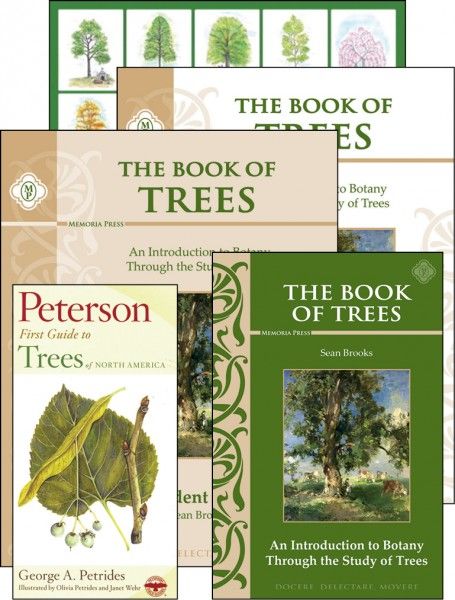
For my review purposes, I received the three main books in The Book of Trees set.  This included:

Memoria Press also offers two other books to round out this set and I would highly recommend them both - The Peterson First Guide to Trees ($7.95) and The Tree Book for Kids and Their Grown-Ups ($15.95).  Both of these books provide great explanations and pictures to help you learn to identify trees.

The Book of Trees is included in the Memoria Press 7th grade curriculum set.  I used the Text as a read aloud for Rachel (2nd grade) and Nicholas (7th grade).  The Student Book is a consumable product and can only be used by one student so Nicholas completed it.  The Teacher Guide covers the goals of the program, a model lesson plan, answers to all of the questions and diagrams in the Student Book, as well as quizzes, tests, and keys.

The Book of Trees Text covers the information in short lessons so even my younger student was able to sit still long enough to listen to the Text.  

The Student Book includes questions and diagrams for the student to complete.  Everything is explained clearly in the Text so Nicholas was able to easily complete the lesson pages in the Student Book.


What I like most about the program is that at the end of each lesson there is a list of hands-on activities.

For the study on root systems, the activities included uprooting plants (with parental permission) and determining the type of root system, looking for root hairs, then making a cross section to look at the internal parts of a root.  

My kids enjoyed this part!  They uprooted two different plants (with my permission).  They examined the roots and determined that one is a fibrous root system and the other is a non-storage tap root.


This fibrous root contains a lot of roots about the same size and all clumped together.


These roots were rather small so Nicholas used a magnifying glass to try to find the little root hairs on it.


While Nicholas looked at the fibrous roots, Rachel studied the tap root.


Together they looked at the epidermis and root hairs.  They were easier to see on this big root.


Next, Nicholas cut a cross section of the tap root.  He made this video explaining what he had learned about the different parts of the root system.


The Book of Trees covers nine chapters including The Beauty of Trees, The Root System, The Stem, The Leaves, Flowers, Fruits, Observing Trees and even some advanced work on Photosynthesis and Respiration.  My kids have enjoyed learning about Botany with The Book of Trees and we would definitely recommend it.


Memoria Press


Some of the other Memoria Press products offered to the Homeschool Review Crew included:


If you would like to read reviews on these other products or other reviews on The Book of Trees, just click the banner below to see what other Homeschool Review Crew members had to say.

Latin, Nature and Trees {Memoria Press Reviews}


Crew Disclaimer

American Indian Craft: Make a Wampum Belt

Early explorers to the New World learned a lot about the Native American Indian way of life.  One thing they were introduced to was wampum belts. As part of our study of the New World and Colonial Times, Nicholas and Rachel each made their own wampum belts.


Wampum was made up of valuable purple quahog shells and white whelk shells.  The Indians would put holes in the shells and string them to make jewelry or belts.  These wampum belts would be used for trading, as a sign of status, to communicate a threat of war or marriage proposal, and also to record history. 

Here is a great video about the history of wampum.


The kids began their project by making their own loom out of a piece of scrap cardboard measuring 13 inches long and about 3 1/2 inches wide.  They cut six slits on each side of short sides of the cardboard.  Then they taped a piece of thread at the bottom and wrapped it around the card, tucking it in each slit as it wrapped around.  These are called the warp threads.  Once they were finished wrapping the loom with warp thread, they cut it and taped the end down.


I found some worksheets online at There's a Dragon in My Art Room that worked perfectly for designing wampum belts for the size of our looms.  The kids colored in the squares to represent where each bead color would go.


We used inexpensive plastic pony beads from the craft store.  The kids threaded their needle and tied the end of the thread to the loom thread.  To use this loom, they loaded the beads on the needle for one column then slid the needle and beads under the warp threads, allowing each bead to settle in between two warp threads.  Then they went to the next column on the pattern and repeated.


It was a little time consuming but it seemed to be a relaxing activity for the kids.  As you have seen, Rachel made a purple and gold LSU wampum belt.


Nicholas wanted to stick with a more authentic look to his wampum belt.  Here he is loading his thread up with beads for a column on his pattern.


And weaving on his loom.  


Here are their completed Wampum Belts.  Unfortunately, as Nicholas was taking his Wampum off of the loom the thread snagged and broke and lots of beads went flying.  He taped up the end so its fine, just a little shorter than originally made.


I found several online resources to help us make these wampum belts but the most helpful resource were some YouTube videos called Art with Mrs. Prestigiacomo.


For younger kids, All Things Beautiful demonstrates a way to make a wampum belt without a loom and using macaroni.